
The S.T.O.P. Practice: A Simple Tool for Stress and Better Leadership
Building a Better World Starts with Connection
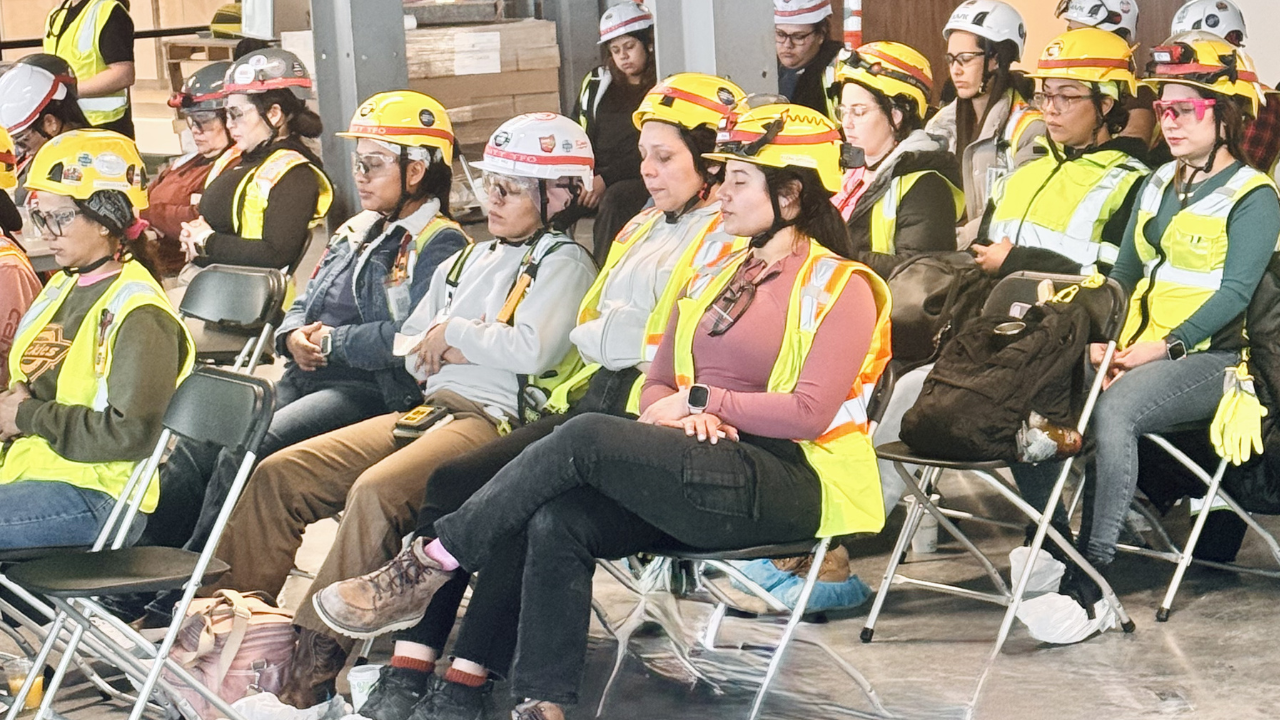
Recently I had the opportunity to speak with a group of women working in construction.
Standing in front of those rooms of leaders, builders, project managers, and problem-solvers was deeply moving.
These women are doing extraordinary work.
They are building complex projects, leading teams, raising families, supporting loved ones, and navigating an industry that is still evolving.
At the beginning of my talk, I showed them a photo of my daughter, Wynn. She’s still very young, but already she has changed the way I think about the future.
Part of why I do this work is an act of courage and love for her.
I want a better world for my daughter.
And that work starts with us.
Regulated, Connected Leaders Change the World
The women in that room were strong, capable, and deeply committed to their work. But like so many of us, they also carry a tremendous amount of responsibility.
Deadlines. Decisions. People depending on them. The constant pressure to perform and keep everything moving forward.
Uncertainty adds another layer; these mindful tools for dealing with uncertainty can help.
When our nervous systems are constantly under stress, it becomes harder to access our best thinking, our patience, and our ability to connect.
That’s why so much of the work we do at Mastermind centers around nervous system regulation.
When we learn to regulate our own stress response, something powerful happens. We become more grounded. More present. More able to lead with clarity instead of reactivity.
Regulated people create regulated environments.
And regulated environments allow people to do their best work.
Connection Is the Way Forward
While we talked about the brain, stress, and practical mindfulness tools for resilience, the core message was actually much simpler.
Connection is the way forward.
Connection to ourselves.
Connection to each other.
In a fast-moving world that often rewards urgency and productivity, it can be easy to lose that connection.
But even small moments of presence can restore it.
A Simple Practice for Stressful Moments
One of the tools I shared with the group is a simple practice you can use anytime stress begins to rise.
It’s called S.T.O.P.
Stop what you’re doing.
Take a deep breath.
Observe what’s happening around you and within you.
Proceed in a way that supports you and the moment.
This practice takes less than a minute, but it can shift everything.
It interrupts the stress cycle.
It gives your brain a chance to reset.
And it helps you respond with intention rather than react on autopilot.
Small Moments Create Big Ripples
What often surprises people is how powerful these small moments can be.
When one person pauses, breathes, and reconnects with themselves, it changes the energy of the room. It influences how conversations unfold, how decisions are made, and how people treat each other.
Those small moments ripple outward.
They shape teams.
They shape communities.
They shape cultures.
And over time, they shape the world our children will inherit.
The future isn’t built only through big decisions and major milestones. It’s also built through these quiet moments of awareness and connection.
And every one of us has the ability to create them.
Final Thoughts
Many leaders today are looking for practical ways to manage stress, support their teams, and stay grounded in high-pressure environments.
Mindfulness practices and nervous system regulation are increasingly recognized as powerful tools for building resilience, improving leadership, and creating more connected workplaces.
And that work starts with us.
In how we respond to stress, lead ourselves, and show up for others each day.